Author: Admin

If you’ve ever experienced sudden joint pain—especially in your big toe, ankle, or knee—you may have been told it’s related to uric acid. But what exactly is uric acid, and why does it cause so much pain? Understanding uric acid is key to understanding gout and other types of inflammatory joint problems. The good news is that once you understand what’s...

Gout is one of the most painful forms of arthritis—but it’s also one of the most treatable. The key to controlling gout is using the right medications at the right time. Some medications are used to stop an acute attack, while others are designed to prevent future flares by lowering uric acid levels. Understanding how these medications work can help you...

Joint pain can affect every part of life. Simple activities like walking, climbing stairs, exercising, or even sleeping comfortably can become difficult when your joints hurt every day. Many people living with arthritis, tendon injuries, or chronic inflammation want relief without depending entirely on medications or surgery. This is one reason why Platelet-Rich Plasma (PRP) injections have become increasingly popular...

Is It Lupus? Early Warning Signs You Shouldn’t Overlook Lupus is a chronic autoimmune disease that can be difficult to recognize in its early stages. Its symptoms often mimic other conditions, come and go unpredictably, and can range from mild to severe. Because of this, many people live with symptoms for months—or even years—before receiving a proper diagnosis. Recognizing the early warning...

Giant Cell Arteritis: The Headache You Should Never Ignore Headaches are common, and most of the time they are harmless—caused by stress, dehydration, or tension. But not all headaches are created equal. In some cases, a persistent or unusual headache may signal a serious underlying condition called giant cell arteritis (GCA). Recognizing the warning signs early can make a critical difference,...

Chronic Back Pain in Young Adults: Could It Be Axial Spondyloarthritis? Back pain is often thought of as a problem that comes with age, poor posture, or injury. But when chronic back pain develops in young adults—especially those under 45—it may be a sign of something more than muscle strain. One condition that is frequently overlooked is axial spondyloarthritis (axSpA), an...

Giant cell arteritis (GCA) is one of the few medical conditions where a headache can lead to permanent vision loss if not treated quickly. While many people dismiss headaches as minor or routine, GCA is different. It is a serious inflammatory disease that affects blood vessels—especially those supplying the eyes and brain—and requires immediate medical attention. Understanding the connection between GCA...

If you’ve been struggling with numbness, tingling, weakness, or radiating pain, your doctor may recommend an EMG or Nerve Conduction Study (NCS). These tests are the gold standard for evaluating nerve and muscle function—and they can reveal answers that no MRI, X-ray, or blood test can provide. Many patients live with these symptoms for months, assuming they’ll “eventually go away,” only...

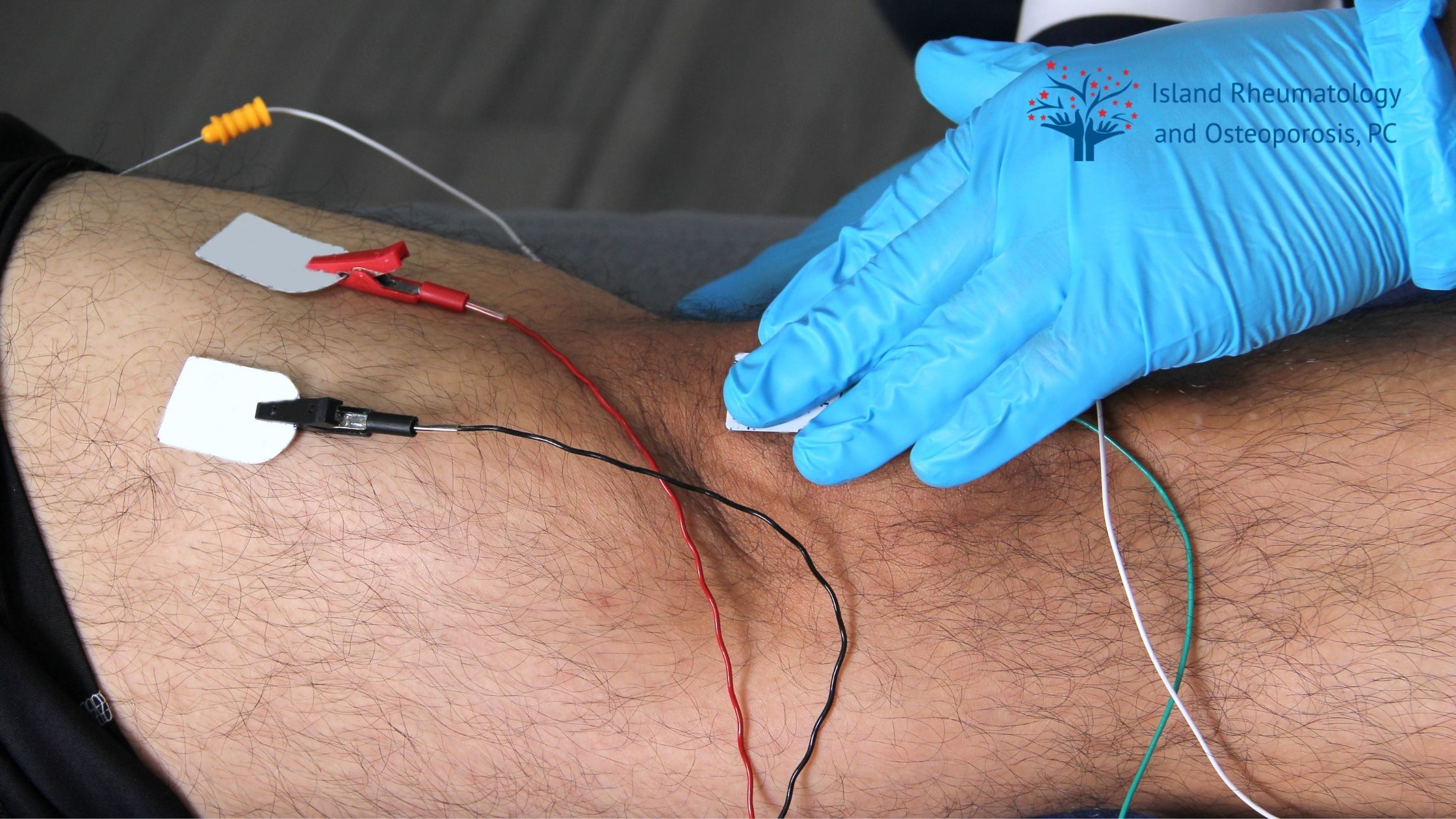
If your doctor has ordered an EMG (electromyography) or NCS (nerve conduction study), it’s completely normal to have questions about what the test feels like and what happens during the appointment. Many patients hear the words “electrical test” or “needle exam” and immediately feel anxious—but the reality is far less intimidating than it sounds. EMG/NCS testing is safe, straightforward, and one...

If your doctor has recommended an EMG or Nerve Conduction Study (NCS), you may be wondering why—and what these tests are designed to uncover. The terms can sound intimidating, but the tests themselves are safe, highly informative tools that help explain symptoms many patients live with for months or even years. EMG/NCS testing looks at how well your nerves and muscles...

Island Rheumatology and Osteoporosis, PC